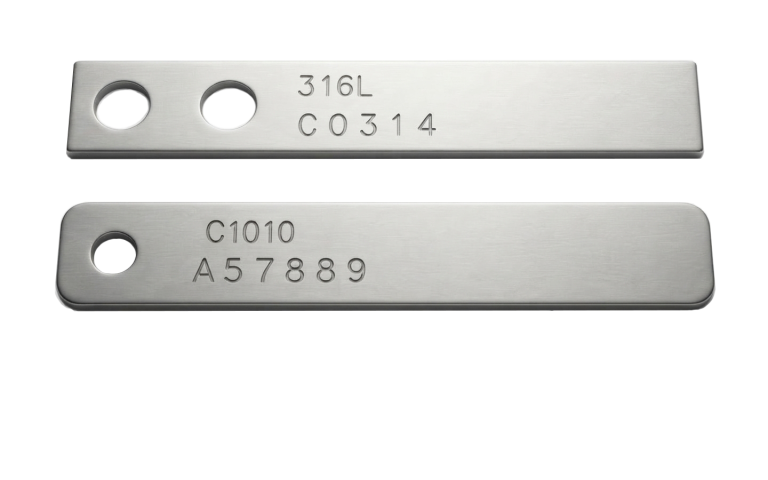
Flat (Strip) Corrosion Coupons
Flat corrosion coupons are the most widely used type of corrosion coupon and are suitable for general corrosion monitoring applications. Their simple design allows easy installation in coupon holders and provides a representative surface area for measuring corrosion rates and evaluating corrosion mechanisms such as uniform corrosion and localized attack.
Flat coupons are commonly used in pipelines, process vessels, water systems, and industrial applications where reliable corrosion trend data is required.
Core Function and Material Selection
Properly selected flat coupons provide quantitative estimates of corrosion rates alongside physical evidence of the type of corrosion occurring within the active process environment. To ensure reproducible and accurate data, coupons must maintain a uniform shape, size, surface area, and finish. They should be fabricated from an alloy that closely matches the composition of the process equipment of interest (such as C1018 carbon steel, stainless steel grades like 304L and 316L, aluminum, or specialized high-performance alloys).
Standard Sizes and Configurations
Flat strip coupons are manufactured in specific standard dimensions, complete with pre-drilled mounting holes, but can also be custom-made to any specification, provided the material properties allow it.
Installation and Orientation Guidelines
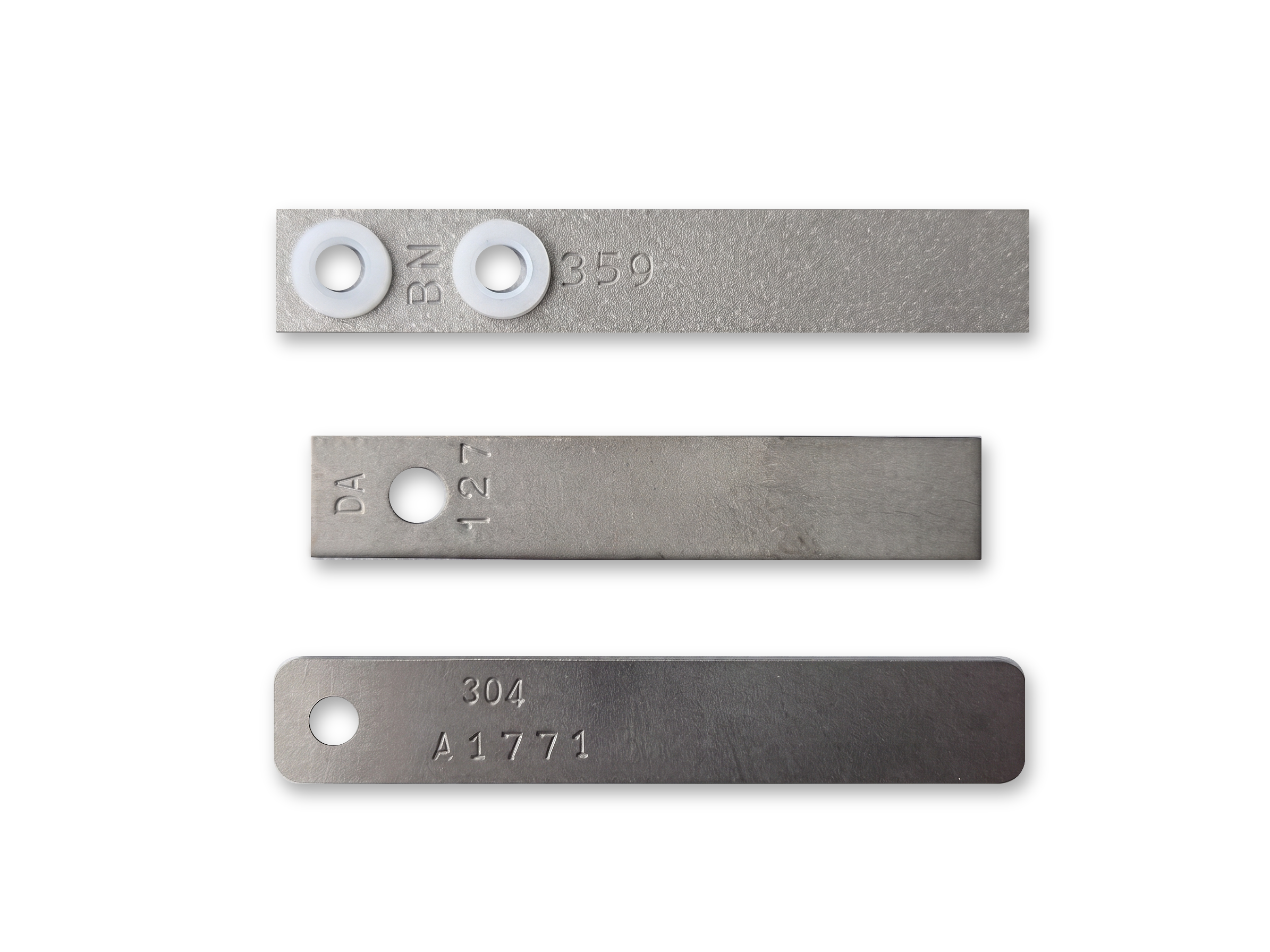
Strip coupons are typically installed in pairs on specialized strip coupon holders. They must be oriented so that they run parallel to the direction of fluid flow, minimizing flow disturbance and ensuring realistic exposure. Coupons can be supplied complete with nylon or optional Teflon insulation components to prevent galvanic corrosion or unintended electrical contact during mounting.
Frequently Asked Questions
A corrosion strip coupon is a small, precisely weighed piece of metal made from a specific alloy that is exposed to an aggressive environment (such as a pipeline, industrial water system, or atmospheric testing rack). By measuring the metal’s weight loss, pitting, or thickness reduction over a set period, engineers can accurately calculate the corrosion rate and assess material degradation in real time.
These coupons are widely deployed across industries where structural integrity and asset protection are critical:
Oil and Gas: Upstream production facilities, pipelines, and downstream refineries.
Water Treatment: Cooling towers, boilers, and municipal water distribution systems.
Marine & Offshore: Ship hulls, ballast tanks, and offshore platforms.
Industrial Manufacturing: Chemical processing plants and HVAC systems.
The corrosion rate is determined by measuring the metal loss after removing the coupon from service and cleaning off corrosion products. It is typically calculated using the standard formula:

Where:
CR = Corrosion rate (e.g., Mils per Year – MPY or mm/year)
K = Constant for the desired unit measurement (534 for W in mg, A in in², T in hour and D in g/cm³)
W = Weight loss in milligrams
D = Metal density in grams per cubic centimeter (g/cm³)
A = Total surface area in square centimeters (cm²)
t = Exposure time in hours
Exposure time depends entirely on the aggressiveness of the environment and industry standards (such as NACE/ASTM guidelines). Typically, coupons remain installed anywhere from 30 to 90 days. In highly corrosive systems, shorter exposure times prevent total destruction of the coupon, while milder environments require longer durations to yield measurable weight loss.
Direct Measurement: They provide physical, highly accurate data on actual material loss rather than estimated electrical resistance.
Cost-Effective: They are inexpensive to purchase and install compared to advanced continuous monitoring equipment.
Alloy Specificity: You can match the exact metallurgy of your system (e.g., Carbon Steel, Stainless Steel, Monel) to see how specific alloys perform.