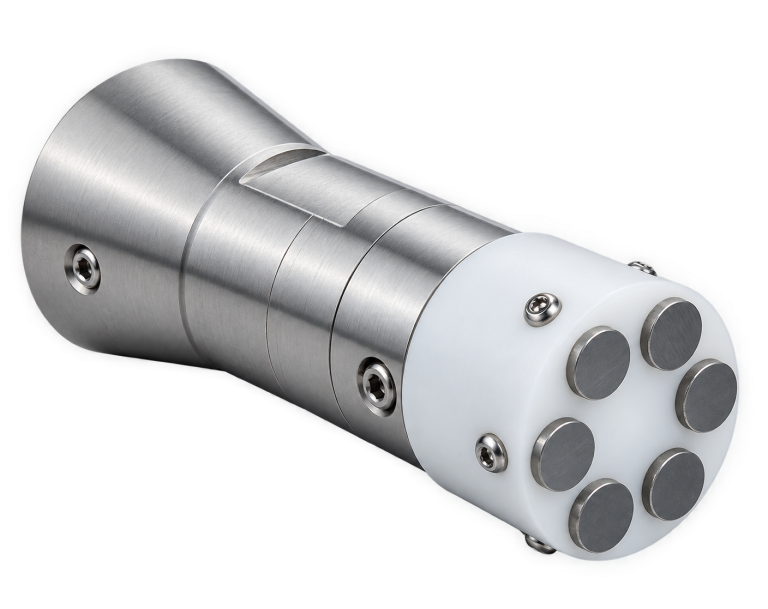
Model HCA200 — Bio-Probe
The Model HCA200 Bio-Probe is a Robbins-type sampling device designed to assess microbiological activity on internal pipeline and vessel walls. Unlike bulk fluid sampling—which only detects free-floating planktonic bacteria—the HCA200 targets sessile bacteria, such as sulfate-reducing bacteria (SRB), that colonize metal surfaces and cause microbiologically influenced corrosion (MIC).
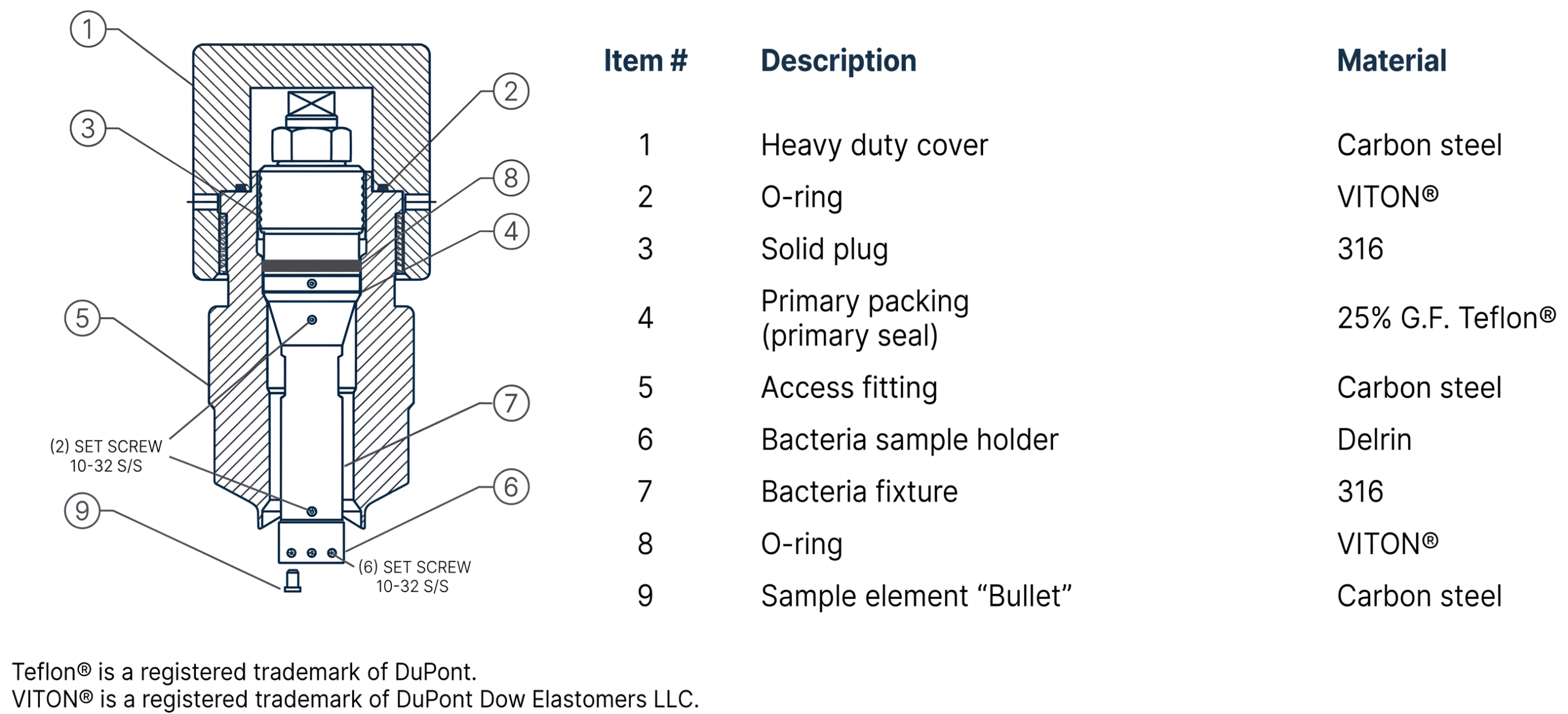
Equipped with a Delrin holder and six removable carbon steel “bullet” sample elements, the probe positions each element flush with the internal wall to capture authentic biofilm growth under operating conditions. Operators can extract these elements at scheduled intervals for laboratory analysis via serial dilution broth bottles, ATP photometry, or epifluorescence microscopy.
Compatible with HP™ and MH™ High Pressure Access Systems via a 316 stainless steel solid plug assembly, the HCA200 enables safe insertion and retrieval under full operating pressure. Regular wall-level monitoring provides early detection of bacterial colonization, allowing teams to apply targeted chemical treatments before severe localized corrosion occurs.
Why Monitoring Bacterial Growth Matters
Monitoring sessile bacterial activity directly at the pipe or vessel wall is essential for preventing microbiologically influenced corrosion (MIC) and safeguarding asset integrity. Unlike planktonic bacteria suspended in the bulk fluid flow, sessile microorganisms—such as sulfate-reducing bacteria (SRB)—establish protective biofilms on metal surfaces and generate aggressive metabolic byproducts that accelerate severe, localized pitting corrosion. Relying solely on bulk fluid sampling often overlooks these wall-bound colonies until significant structural damage or leaks have already occurred. By tracking bacterial colonization at the earliest stages, operators can verify the effectiveness of biocide programs, optimize chemical dosing schedules, and intervene before mature biofilms form, ultimately minimizing unplanned downtime and costly equipment replacements.
Frequently Asked Questions
Biofilm is a layer of microorganisms (such as bacteria, algae, and fungi) that attaches to industrial surfaces and secretes a protective matrix. When biofilms form on metal equipment, they create micro-environments that differ from the bulk fluid. This leads to Microbiologically Influenced Corrosion (MIC), where localized chemical changes beneath the biofilm drastically accelerate severe pitting and metal degradation.
Bulk fluid samples only capture planktonic (free-floating) bacteria suspended in the process flow, which rarely cause direct structural damage. The most destructive microorganisms, such as sulfate-reducing bacteria (SRB), are sessile and colonize the internal surfaces of pipelines and vessels. Because the Model HCA200 positions its sample elements flush with the pipe wall, it directly monitors these surface-bound colonies where microbiologically influenced corrosion (MIC) actually takes place.
Yes. When paired with a compatible HP™ or MH™ High Pressure Access System and the corresponding 316 stainless steel solid plug assembly, the bio-probe can be safely inserted and retrieved under full operating pressure using a standard retrieval tool and service valve.
Monitoring devices should be installed in critical or vulnerable areas where biofouling and MIC are most likely to occur. Common installation points include low-flow zones, stagnant pipe legs, heat exchanger inlets/outlets, cooling tower return loops, and water injection lines.
Once an element is extracted, the surface deposit is scraped off for laboratory evaluation. Common analysis methods include Serial Dilution Broth Bottles (for culturing specific bacteria such as SRB, aerobic, or anaerobic species), as well as ATP photometry and epifluorescence microscopy for rapid, quantitative measurement of total biological activity.