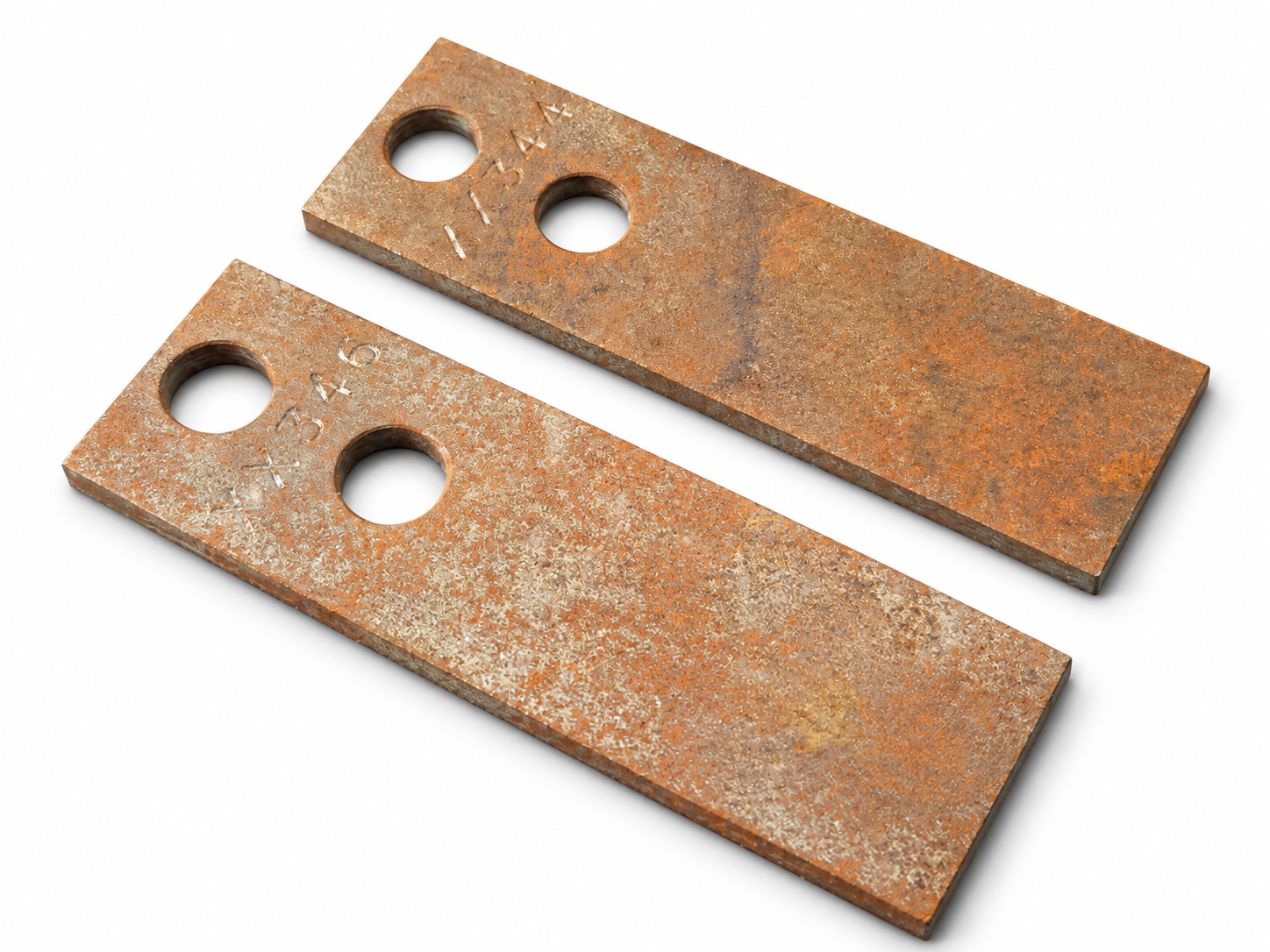
Calculate the corrosion rate of your metal samples with ease
The corrosion rate, expressed in mills per year (MPY), indicates how quickly a metal loses thickness due to corrosion. This calculation helps assess material performance, compare corrosion resistance, and estimate the potential impact of corrosion on equipment and industrial assets.
Using the weight loss of a corrosion coupon, its exposed surface area, the material density, and the exposure time, you can calculate the average corrosion rate in MPY.
Calculation formula
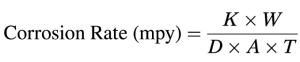
Where:
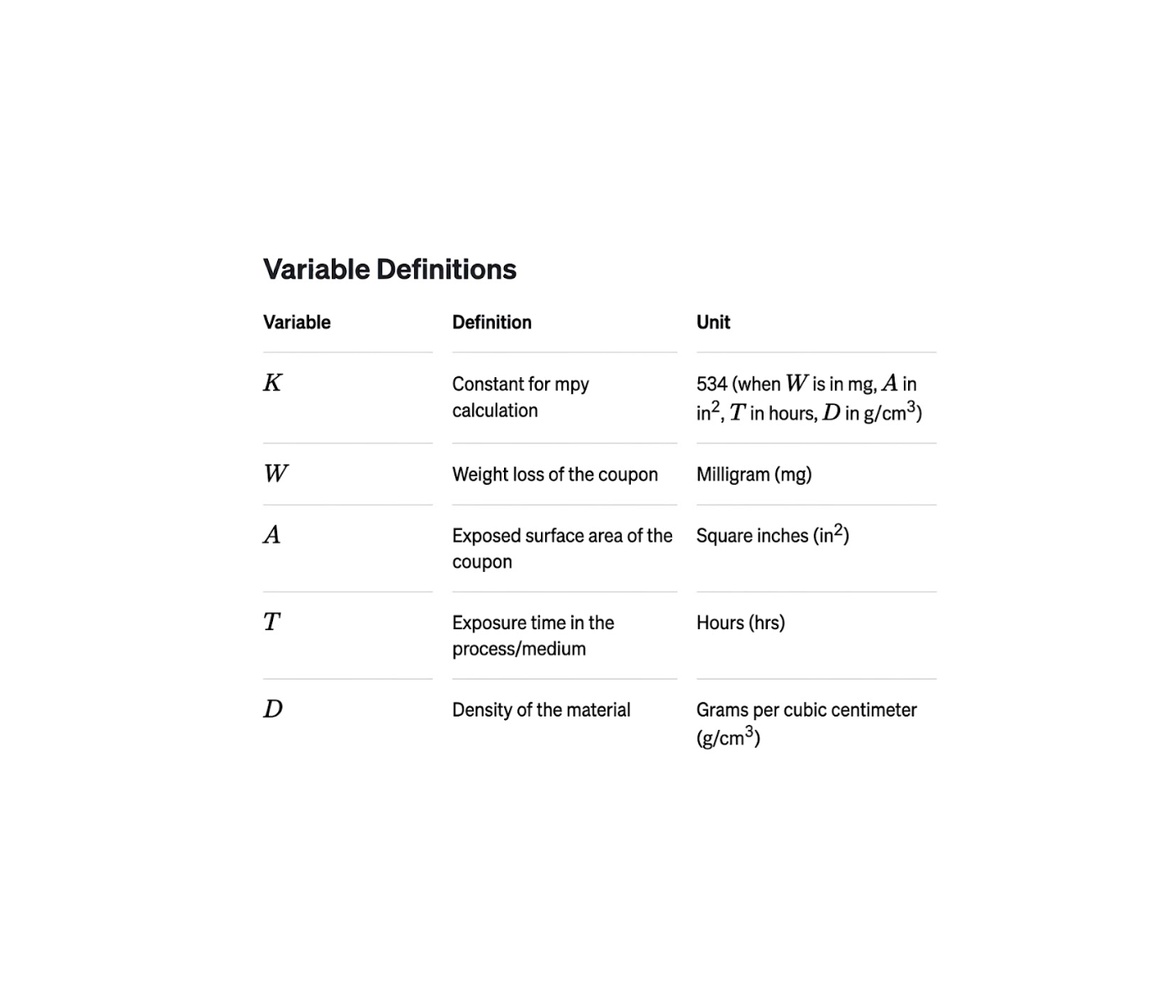
W = Weight loss (in milligrams)
D = Density of the metal (in g/cm³)
A = Exposed surface area (in square inches)
T = Exposure time (in hours)
K = (534) Conversion factor for calculating the corrosion rate in mills per year
One mil equals 0.001 inch (0.0254 mm).
Calculation Example: Corrosion Rate in Mills per Year (MPY)
Suppose a carbon steel coupon (D = 7.86 g/cm³) with an exposed area of 3.5 in² is exposed in a system for 30 days (720 hours). After cleaning, the measured weight loss (W) is 125 mg.
Given data
| Parameter | Value |
|---|---|
| Weight loss (W) | 125 mg |
| Density (D) | 7.86 g/cm³ |
| Exposed surface area (A) | 3.5 in² |
| Exposure time (T) | 720 hours |
Step 1: Insert the measured values
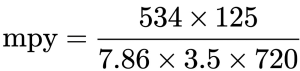
Step 2: Calculate the result
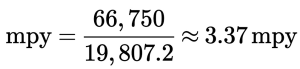
Calculated corrosion rate
3.37 MPY
This corresponds to approximately 0.0856 mm/year.
Conclusion
The carbon steel coupon has an average corrosion rate of approximately 3.37 mills per year (MPY) under the tested conditions. This value can be used to compare material performance and evaluate corrosion trends. However, localized corrosion such as pitting may result in significantly higher local metal penetration than the average rate indicates.